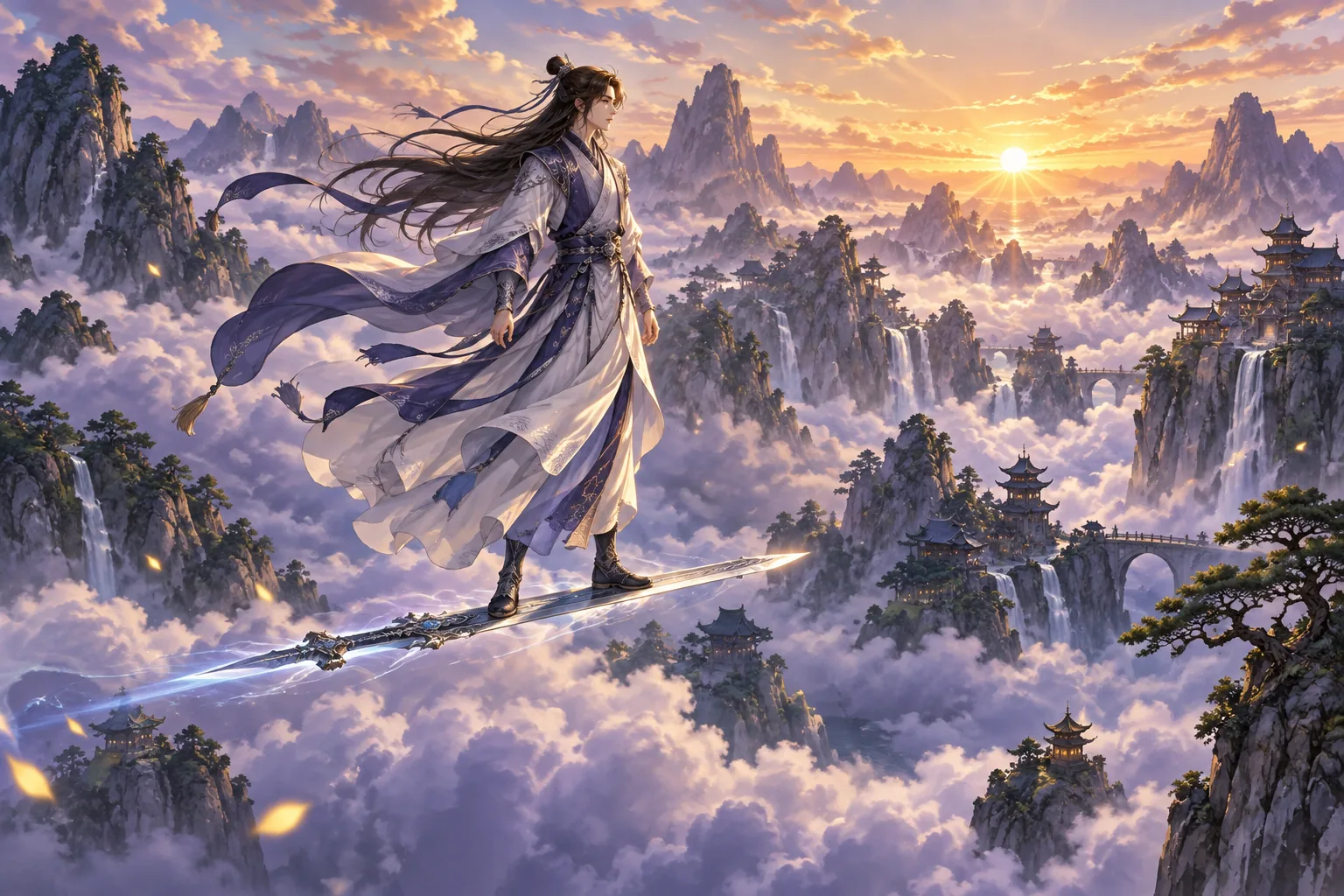
The first obstacle in a fantasy manhua is sometimes vocabulary rather than plot. Cultivation, qi, sect, master, immortal: unfamiliar words can arrive before you have a reason to remember them. Trying to learn everything in advance risks turning a story into homework. A more practical beginning is to identify what the protagonist wants, who can help, and what that help will cost. Terms become easier to retain when they explain a specific choice.
Wuxia and xianxia provide context, not a rulebook
The publishing platform Wuxiaworld distinguishes wuxia stories about martial heroes from xianxia fantasy involving immortals, magic, and other supernatural elements. Its explanation concerns novels, but provides useful context for comic adaptations. The platform also acknowledges that genres can overlap.
For a reader, identifying the main conflict is more productive than policing a perfect boundary. Does a character’s obligation to a teacher drive the story? Does the possibility of transcending human limits matter most? Are rival institutions competing for authority? A work can combine those concerns. The label helps establish expectations; the scenes reveal what the creator does with them.
A fantasy story is also not a literal explanation of historical practices or religious beliefs. It can reshape cultural ideas into its own narrative mechanisms. Remembering that distinction lets you explore its references without treating an invented technique as a factual account of how people lived or believed.
Cultivation means development, but each story sets its conditions
In this fiction, cultivation commonly concerns the development of physical, spiritual, or supernatural capabilities. The Wuxiaworld glossary connects qi with vital energy and explains recurring vocabulary such as schools, clans, and immortals. These are useful reference points, rather than compulsory rules for every fictional universe.
Avoid automatically importing a ranking system from your previous read. A familiar term may have a different role. A supposedly weaker character may have information, allies, or a specialized ability that changes the situation. When a scene surprises you, first check the conditions the current story has established.
A useful note has four fields: ability, requirement, cost, and limit. In an imaginary example, a student might learn a technique through training, spend energy when using it, and need time to prepare it. That sketch explains potential tension better than a list of twenty power levels disconnected from decisions.
Institutions matter as much as abilities
The glossary distinguishes family-based clans from organizations devoted to instruction or practice. “Sect” may appear as a translation for an organization in this setting; it should not automatically carry every association the word has in everyday English. Read what the group actually does before deciding what membership means.
When an institution enters the story, record what it demands, what it offers, and whom the protagonist answers to. You can understand a disagreement about loyalty before remembering every surname. Asking who might lose status, resources, or protection helps explain why an apparently quiet conversation has serious stakes.
Forms of address can also make hierarchy visible. Instead of memorizing each title immediately, notice whether people speak differently when a relationship becomes closer, more formal, or openly hostile. A change in address can carry information that a simple word-for-word definition misses.
A publishing example does not define the whole field
Seven Seas describes Grandmaster of Demonic Cultivation, credited to Mo Xiang Tong Xiu and Luo Di Cheng Qiu, as a xianxia manhua adaptation. This places the book within a recognizable tradition. It does not mean that its relationships and conflicts will operate exactly like those of every other cultivation story.
If you enjoy mysteries, pay attention to how information is distributed. If you enjoy progression, ask whether advances change the protagonist’s available choices. Those are different reading interests, and a story may satisfy both. For help separating medium from publishing tradition, see our guide to manga, manhua, and manhwa.
Read the scene first; look up what blocks understanding
After a chapter, summarize an objective, an obstacle, and a decision. If you can identify them, you probably understand enough to continue. Look up a term when it prevents that understanding, rather than simply because it is new. Extensive character encyclopedias can reveal identities or outcomes well before the story does.
Keep your notes short and revise first impressions when new evidence appears. Some uncertainty is deliberate: a narrative may want you to question an institution before explaining it fully. If you prefer a first read with less fantasy vocabulary, our manhua guide organized by tone offers other starting points.