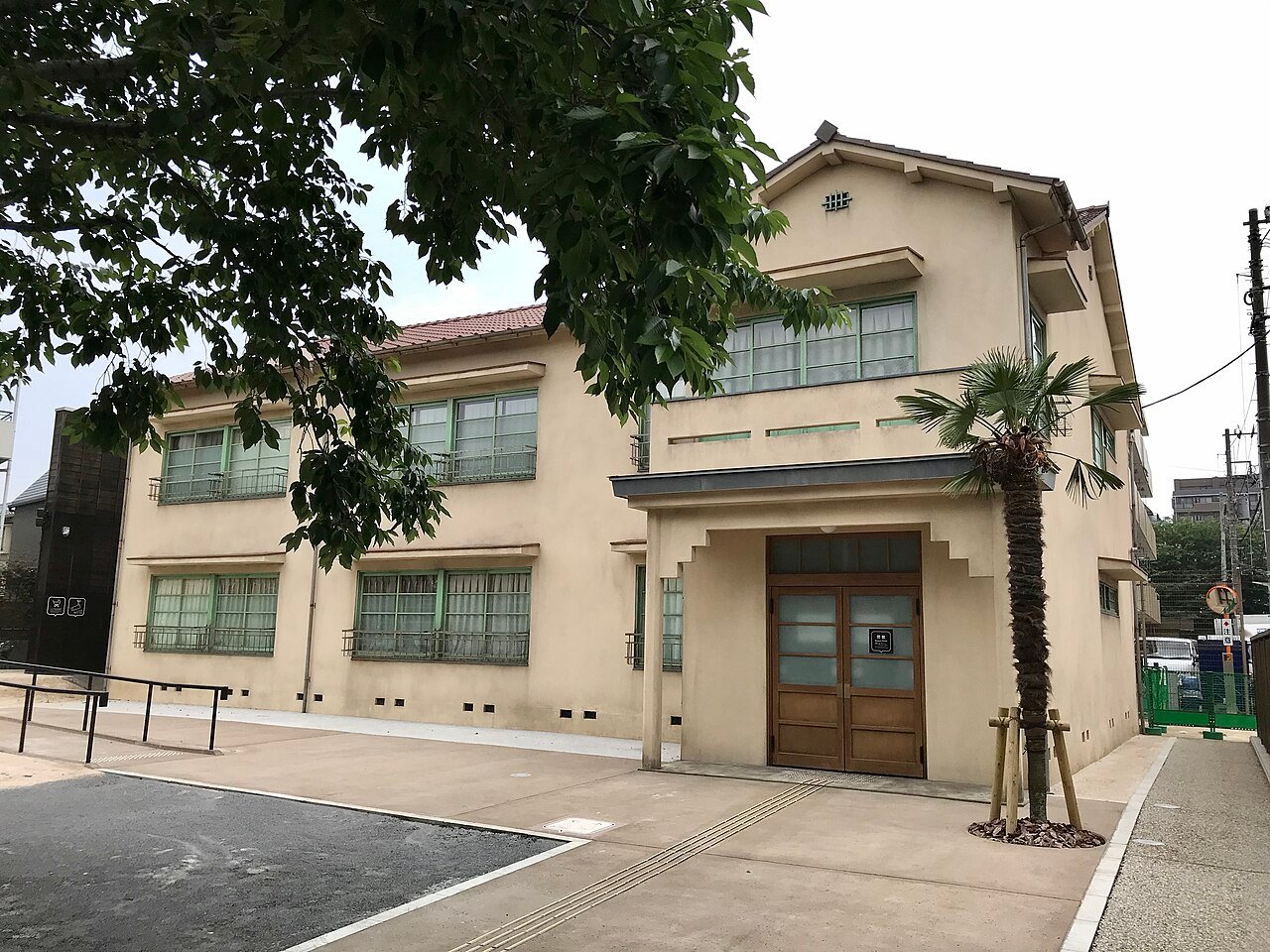
A desk, a small room and a shared corridor can tell a different story about manga from a wall of finished pages. Toshima City’s Tokiwaso Manga Museum asks visitors to consider the setting in which young creators lived and worked. The first thing to understand is that the building you visit is a reconstruction.
What the museum preserves through reconstruction
The museum’s account describes the original apartment building as dating to 1952; Osamu Tezuka moved there the following year. The original was demolished in December 1982. Japan’s government publication Highlighting Japan explains that Toshima City opened the reconstructed museum in 2020, recreating the environment of the artists’ earlier lives.
That distinction is part of the visit’s value. A reconstructed room can make spatial relationships understandable, but it should not be described as an untouched room that has survived since the 1950s. Read labels for the difference between an original object, a replica and an interpretive display. Each can be useful evidence, provided you know which one you are seeing.
Give the room a question to answer
Instead of trying to memorize a list of famous residents, pick one question: how much room is there to work? What separates the private room from shared space? What does the display suggest about communication with editors or other artists?
Then compare what the reconstruction makes visible with what it cannot settle. A room layout can help you imagine the space occupied by a desk. It cannot, by itself, establish how many hours a particular artist worked on a particular day. For claims about individual routines, look for a cited recollection, document or exhibition label.
Practical details that affect your visit
The current English visitor guide lists opening hours of 10:00–18:00, with last admission at 17:30. Mondays are normally closed, with a following-day closure when a national holiday falls on Monday; exhibition changes and the New Year period can also affect opening. It states that special planned exhibitions can require paid admission throughout the museum.
Reservations receive priority, while walk-in admission depends on space. The booking page uses 20-minute arrival slots and estimates a 40–60-minute exhibition visit. Treat the arrival slot as an entry arrangement, not as a statement that your entire visit lasts 20 minutes. Check the current opening calendar and exhibition before traveling.
Pack for the actual rules
The museum asks visitors to remove shoes and wear or bring socks. Photography is limited to permitted areas; video, flash and selfie-stick photography are prohibited. Leave time to put belongings away and read the signs. A camera rule can vary within the building, so permission in one room should not be carried into the next.
A useful personal note has three columns: what you saw, what the label said, and what you still want to investigate. This keeps your own interpretation separate from the museum’s account. It also gives you a specific follow-up question when you later read a creator’s work.
Pair the visit with reading
Choose a work by one associated artist before the trip, then return to a few pages afterward. Look at the practical choices on the page—room interiors, props, crowding and the use of empty space—without assuming the work is autobiographical. If your main goal is spending hours reading rather than exploring reconstructed living space, compare the different purpose of the Kyoto International Manga Museum.
Sources & reporting notes
Sources checked 2026-10-27. Dates and availability can change after that check.
- Tokiwaso Manga Museum: history and visitor guide
- Tokiwaso Manga Museum: reservation conditions
- Highlighting Japan: the museum reconstruction, August 2024
Desk research using the linked institutional and publisher sources. Examples and reading exercises are NextPanelTalk analysis; no interview or on-site visit is claimed.