A comic reader can pause, go back a panel or turn a page early. At a live picture-story performance, a storyteller can decide when the next image appears. That difference in control makes kamishibai an illuminating comparison for people interested in manga and animation.
The Kyoto International Manga Museum’s kamishibai page describes traditional Japanese storytelling with pictures and introduces its Yassan Ichiza performances. The museum places this activity alongside reading and exhibitions, offering a way to explore visual storytelling through a live voice rather than a printed page alone.
One image can have more than one duration
Consider a single picture held before an audience. The performer can describe it quickly, linger over a detail or wait for a response. The picture has not changed, yet the audience’s experience of its duration has. The next image can then arrive as an answer, an interruption or a reveal.
This is an analytical comparison, not a claim that every performer follows one standardized technique. At a performance, look for the particular relationship between the teller’s voice and the changing pictures.
Three things to notice
- The reveal: does the performer change the picture immediately after a question, or allow the audience to anticipate it?
- The voice: does a shift in pace or emphasis direct attention toward a detail already visible?
- The audience: does a response alter how long an image is held or how an explanation continues?
These observations produce a more precise account than saying the show is “like an old anime.” Animation normally presents movement through a timed image sequence; a live picture-story performance includes a person responding in the room. Neither description requires treating one medium as an incomplete version of the other.
What a historical photograph can and cannot tell us
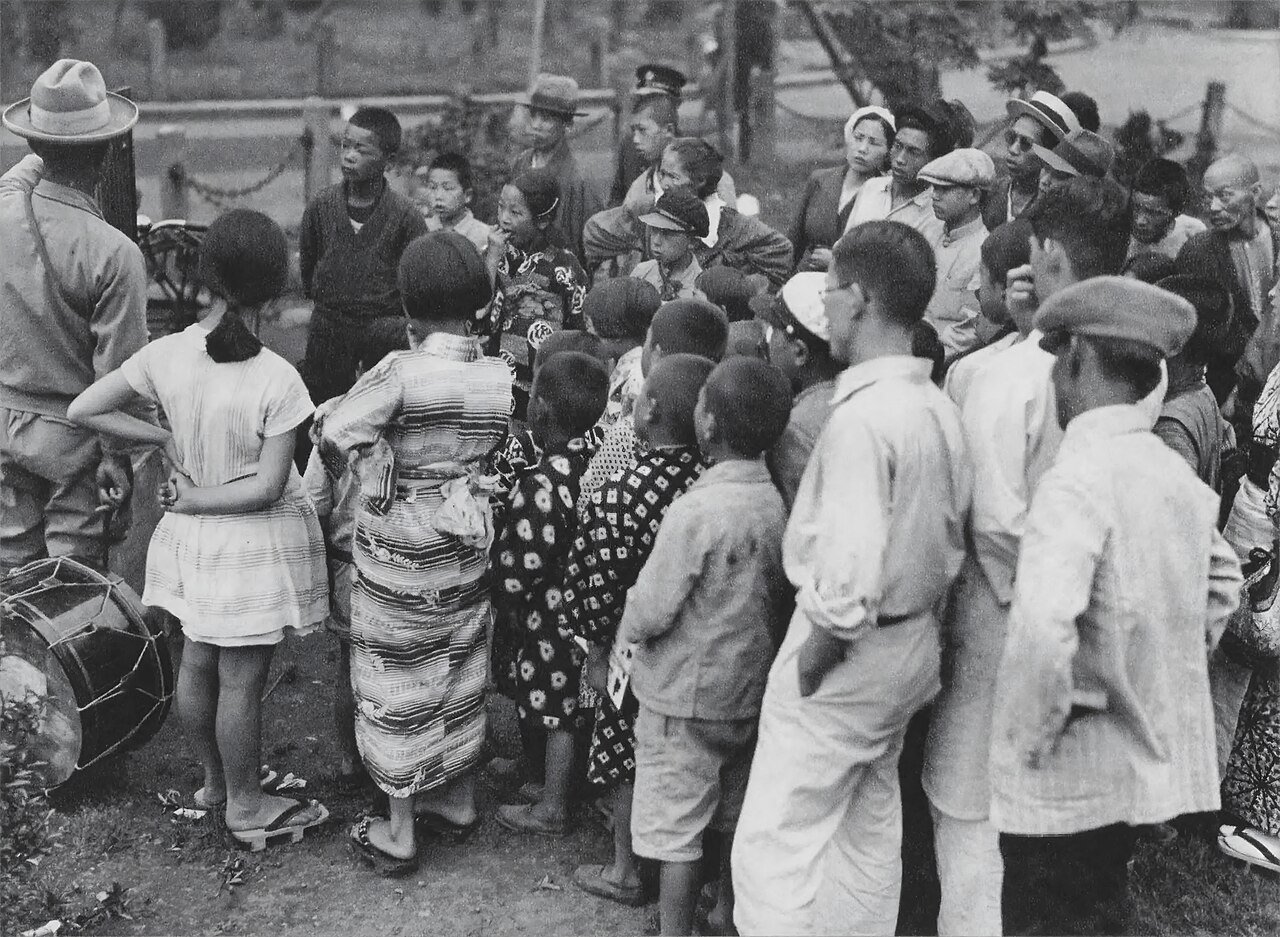
The photograph accompanying this article is dated July 6, 1928, and identified as a kamishibai scene in Asakusa, Tokyo. It can show the arrangement of people and the performance setting at one captured moment. It cannot preserve the storyteller’s delivery, the exact narrative or the audience’s experience over time.
That limit is useful. It reminds us to distinguish an image of a performance from the performance itself. We have kept the historical date in the caption rather than using the photograph to suggest we attended a current event.
Planning a contemporary encounter
The museum’s visitor FAQ lists kamishibai among its activities, alongside reading, exhibitions and workshops. Check the museum’s current calendar for performance availability, language and any changed arrangements. A long-standing introductory page is not sufficient evidence for a particular day’s schedule.
If you do not follow all of the spoken language, you may still notice timing and audience interaction. Be clear about that limitation when describing what you learned: observing a transition is different from understanding every line of the story.
Afterward, compare the experience with a manga page turn or an animated scene. Who controlled when new information arrived? What could you revisit, and what existed only in that moment? Those questions make the connection between media specific without flattening their differences.
Sources & reporting notes
Sources checked 2026-10-20. Dates and availability can change after that check.
Institutional sources checked October 20, 2026. No attendance at a live performance is claimed. The photograph's provenance and public-domain status are recorded in Image Credits.