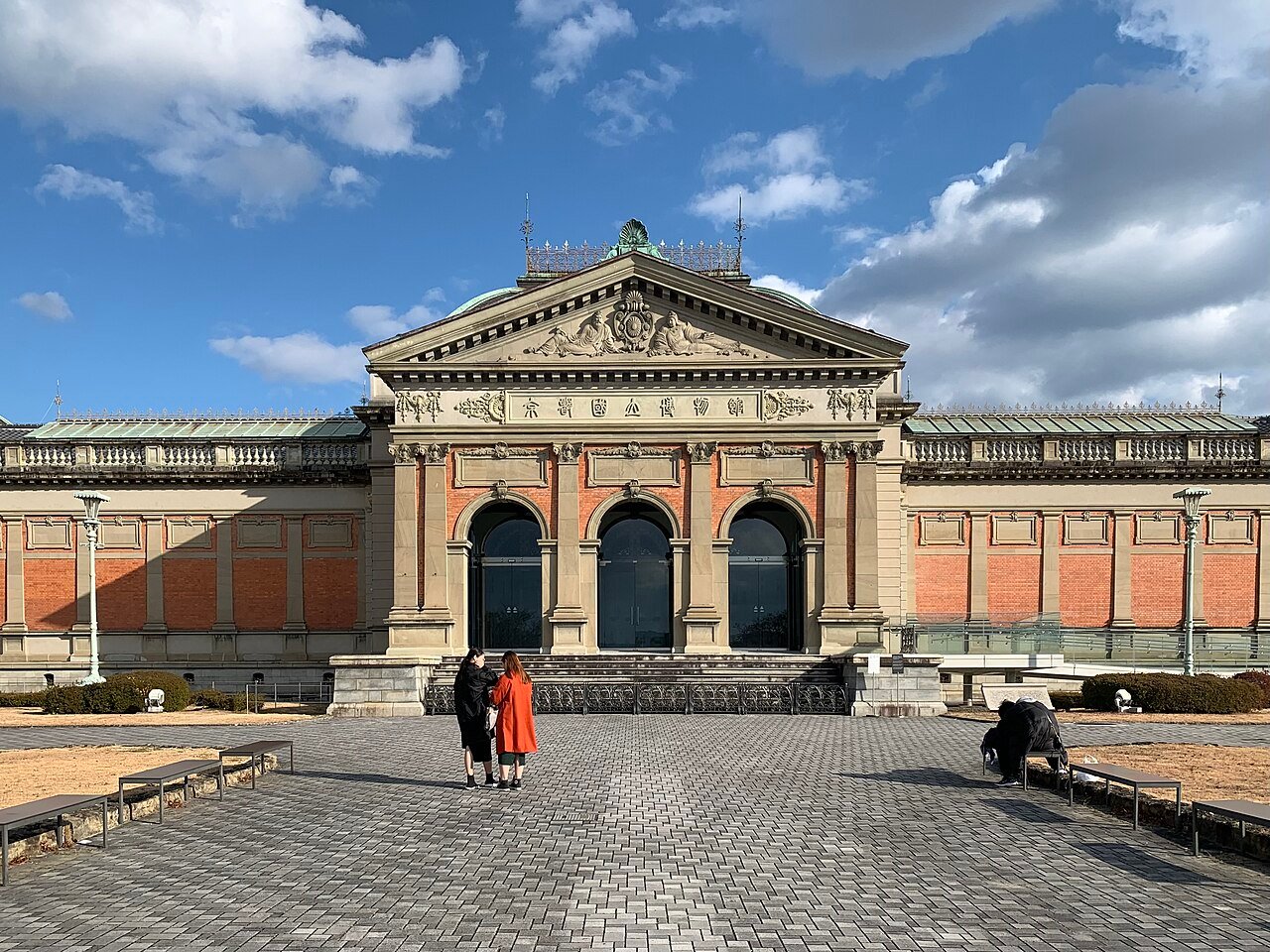
Kyoto National Museum’s exhibition The Tale of Genji: Radiant Culture of the Japanese Imperial Court is now open in the Heisei Chishinkan Wing. It runs from October 6 to November 29, 2026. For visitors interested in how a Japanese story moves between media, the useful detail is its changing display schedule rather than the closing date alone.
The museum’s exhibition page identifies two main installations: October 6–November 1 and November 3–29. Some individual objects have shorter display periods. The page lists the “Hashihime” handscroll scene for November 3–15 and “Yadorigi III” for November 17–29. Seeing one of those named works requires matching the visit to its own dates.
A story told through more than pictures
The exhibition brings together manuscripts and commentary, paintings, decorative arts and materials relating to Noh. Its subject is not simply what the characters look like. It asks how a literary work can be copied, interpreted, performed and turned into objects across generations.
For a manga or anime reader, that supplies a useful comparison with adaptation. A change of medium does not merely reproduce the same material on a different surface. A performance directs attention through voice and movement; a painted scene can emphasize the arrangement of people and architecture; a manuscript preserves a particular textual version. Ask what each object makes available and what it leaves to the viewer’s prior knowledge.
Three questions to take into the galleries
- What part of the story is visible? Read the label before assuming a scene represents the entire narrative. Note whether the image focuses on an encounter, a place or an object associated with an episode.
- What does the format change? Compare a handscroll scene with an object designed for a room or a performance. Their scale and intended viewing situations shape what can be emphasized.
- What is the date of this version? Distinguish the period in which the literary work originated from the date of the manuscript or artwork in front of you.
These are looking prompts, not claims that we have inspected the installed works. They are intended to help visitors use the museum’s labels and catalog rather than substitute a simplified plot summary for them.
Practical information to verify before going
The museum’s November calendar distinguishes open days, closures and extended evening hours. Check the exact day, final-entry time and object rotation before buying a ticket. A general museum opening time is not always the last time admission is allowed.
The Genji and Noh symposium was scheduled for October 25 and is now in the past. Do not confuse that one-day program with the exhibition, which continues through November 29. For a visit after October 27, the useful choices are the remaining installation periods and each object’s individual dates.
If your visit falls outside a particular object’s display period, decide whether the wider exhibition still meets your interests. That decision is more reliable than planning around one widely shared publicity image.
Sources & reporting notes
Sources checked 2026-10-27. Dates and availability can change after that check.
Information checked October 27, 2026. This is a source-based exhibition guide, not an on-site review. The museum's current calendar and object list take precedence over this summary.